


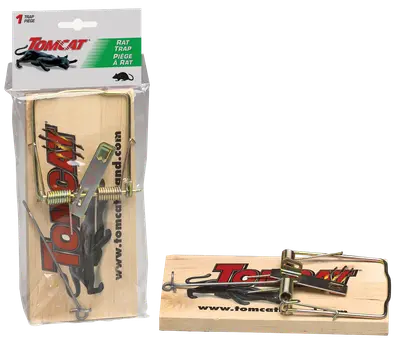
Tomcat Rat Wood Traps
Tomcat Rat Wood Traps (item 0360320): wood-base spring traps sized for rats. Tomcat: keep traps out of reach of children and pets.
Payment and Security
Payment methods
Your payment information is processed securely. We do not store credit card details nor have access to your credit card information.
Details
Tomcat Rat Wood Traps are wood-base spring traps sized for rats, sold in Canada by Scotts Canada under the Tomcat brand (item 0360320). They are mechanical traps, not a pesticide, so they carry no PCP registration number. Setting them, from Tomcat's directions: "Bait trigger of trap with Tomcat® Mouse & Rat Attractant Gel, peanut butter or cheese spread." "Set trap by pulling U-shaped bar to opposite end and insert curved end of pin into raised side of slot of trigger." Tomcat's spacing line is "For best results, place traps every 1/2 - 1 m." Where to set them, per Tomcat: "Place trap where rodents travel, usually a 25 - 100 ft. area between their nest and food source". Tomcat lists along walls, in corners and near potential food sources, and names basements, attics, garages and sheds among the places they suit, indoors or outdoors. Cautions, from Tomcat: "Keep the traps out of reach of children and pets, as they can pose a risk if tampered with or accidentally triggered." Tomcat also says to always wear gloves when handling dead rodents. For barns, shops and outbuildings, see our guide Fall Mouse Control for Barns, Shops and Outbuildings in Alberta; our guide How to Keep Mice Out of an RV, Camper or Trailer Over Winter: What the Labels Allow quotes Alberta's public-health advice on cleaning up rodent droppings safely. For how many traps to set, where to put them and how often to check them, see our guide Mouse and Rat Traps in Canada: Snap, Wood, Glue or Live-Catch? Where to buy: Pipestone Farm Supply lists Tomcat Rat Wood Traps in Millet, Alberta (between Leduc and Wetaskiwin, south of Edmonton), with Canada-wide shipping and free in-store pickup. Source: Tomcat product page for Tomcat Rat Wood Traps (item 0360320), scottsmiraclegro.com/en-ca, viewed October 2026.
Specifications
- Brand
- Tomcat
- Product name
- Tomcat Rat Wood Traps
- SKU
- 0360320
- MPN
- 0360320
- UPC / GTIN
- 888603036035
- Category
- Pest Control › Mouse and Rat Control
- Sold by
- Pipestone Farm Supply, Millet, Alberta
- Availability
- In stock
Customer reviews
More from Tomcat
View all Tomcat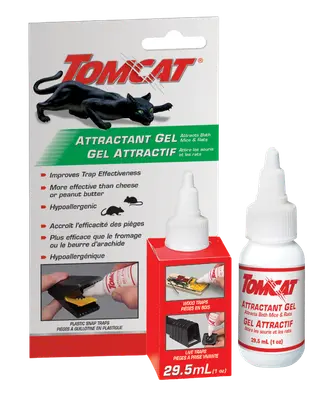
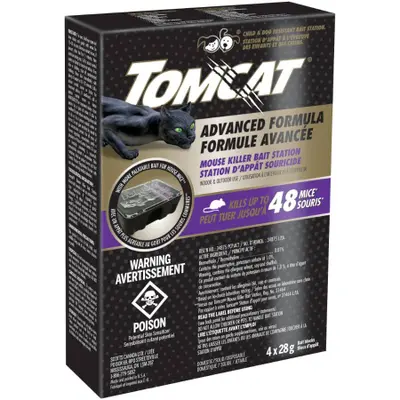
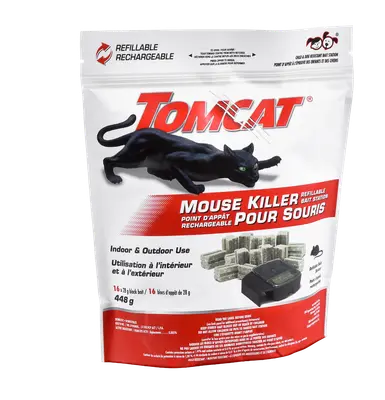
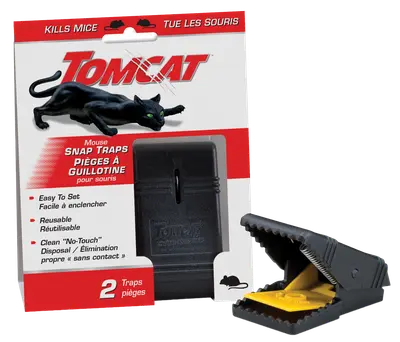
- Read the guide: Tomcat bait stations: mouse vs rat, refillable vs disposable, what the label says
Which Tomcat station is registered for mice and which for rats, how the refillable (diphacinone) and Advanced Formula (bromethalin) labels differ, and the spacing, bait-duration and glove rules each label sets.
- Read the guide: Fall Mouse Control for Barns, Shops and Outbuildings in Alberta
A label-accurate fall plan for keeping mice out of barns, shops, grain bins and RVs: entry points, traps versus bait stations, and safe clean-up.
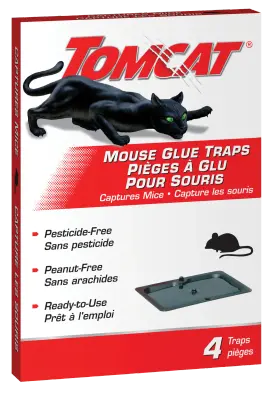
- Read the guide: Mouse and Rat Traps in Canada: Snap, Wood, Glue or Live-Catch?
Health Canada's guidelines for sizing, placing, baiting and checking mouse and rat traps, and the snap, wooden, glue and live-catch traps we list.